
-

-


Follow Us
-

 On Facebook
 On Flipboard


 Free Newsletters
 On YouTube
St. Louis Cardinals News / Viva El Birdos / June 13
Power Is Carrying the Cardinals’ Position Player Development So Far 
Last week, I did my best to quantify how the Cardinals’ minor league pitching talent was developing so far this year. When looking at both team level statistics and individual breakouts, I concluded that 2026 has been a net positive for the pitching pipeline.
Blaze Jordan News / Viva El Birdos / June 12
Blaze Jordan Has Multi-Hit Game, But Cardinals Bullpen Blows Lead Late to Twins
Friday night’s game in Minnesota was a turning point of sorts for the St. Louis Cardinals after several roster moves one of which was the debut of Blaze Jordan.

MLB News / Viva El Birdos / June 12
Game Discussion for St. Louis Cardinals vs Minnesota Twins Friday
After taking 2 out of 3 from the New York Mets, the St. Louis Cardinals travel to Minnesota to take on the Twins. Friday night, it’s Kyle Leahy on the mound for the Cardinals as he’ll do battle with Joe Ryan, the starter for the Twins.


The 'MLB K-leaders since 1995' quiz
How many of the pitchers to lead all of Major League Baseball in strikeouts in the Wild Card Era (since 1995) can you name in five minutes?
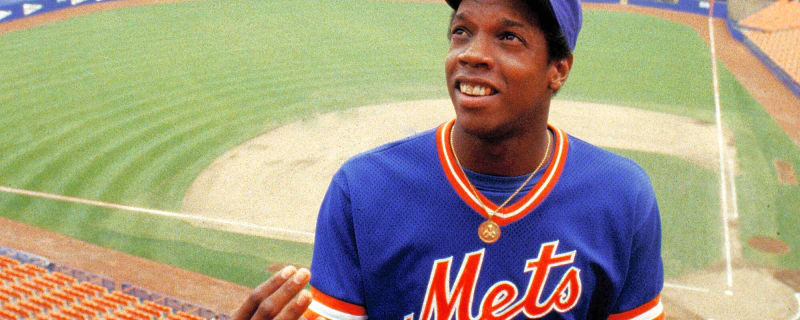
The 25 greatest rookie seasons in MLB history
Not every all-timer has instant success at the next level. For many baseball players, it takes a few bumps in the road out of the gate before they ever reach stardom.
Blaze Jordan News / Field Level Media / June 12

Cardinals’ Blaze Jordan to make major league debut Friday
The St. Louis Cardinals selected rookie corner infielder Blaze Jordan from Triple-A Memphis on Friday to make his major league debut against the host Minnesota Twins.
St. Louis Cardinals News / MLB on ClutchPoints / June 12

Cardinals rumors: What St. Louis wants to ‘upgrade’ before MLB trade deadline
The St. Louis Cardinals are in an interesting spot. While they entered the season in a rebuild, the Cardinals have upset expectations up to this point.
St. Louis Cardinals News / Athlon Sports / June 12

Insider Hints at Cardinals' Trade Deadline Plans
The St. Louis Cardinals have been one of the big surprises of the 2026 season. Sitting at 37-29 just four games back in the NL Central of the first-place Milwaukee Brewers, the rebuilding club has blown past most reasonable expectations thus far.

Which 20 players have hit four home runs in an MLB game?
The only two things rarer in modern-day baseball than the four-homer game is the Triple Crown and the unassisted triple play. The former is, of course, done over an entire season, while there's a large level of lucky in the unassisted triple play.
St. Louis Cardinals News / St. Louis Cardinals on SI / June 12

Cardinals Mock Draft Lands Standout LSU Outfielder in St. Louis at No. 13
One thing that is going to be exciting during the summer for the St. Louis Cardinals is the 2026 Major League Baseball Draft. First and foremost, Cardinals president of baseball operations Chaim Bloom has been known throughout his professional career in front offices for his ability to build an elite farm system.
Jordan Walker News / MLB on ClutchPoints / June 12

Cardinals’ Jordan Walker gets 100% real on struggles before breakout 2026 season
The St. Louis Cardinals are playing some good baseball this season, as they’re currently 37-29 and are in second place in the NL Central. They’re getting solid play from several players, and Jordan Walker is the one who has caught the eyes of many.



St. Louis Cardinals News / St. Louis Cardinals on SI / June 12

Chaim Bloom Has Succeeded where John Mozeliak Failed in 2026
The St. Louis Cardinals were unable to complete a sweep over the New York Mets on Thursday, but they remain eight games above the .500 mark as they head into a crucial weekend series against the Minnesota Twins.
MLB News / Field Level Media / June 12
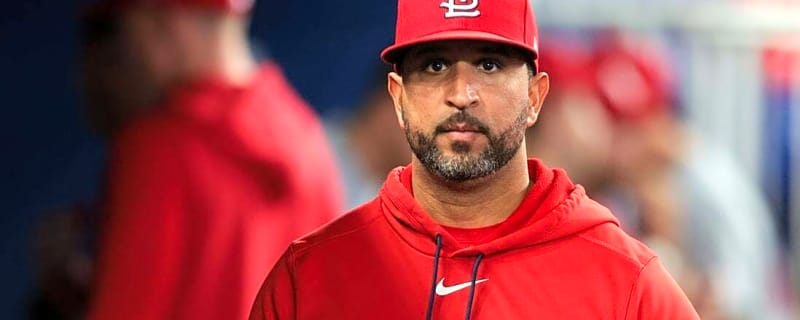
Cardinals carry positive vibes into series opener vs. Twins
The St. Louis Cardinals landed in Minnesota with their confidence sky high. A 5-4 loss in Thursday's series finale at the New York Mets did little to dampen the Cardinals' spirits.
St. Louis Cardinals News / St. Louis Cardinals on SI / June 12

Cardinals Riley O'Brien's Days in St. Louis Could Be Numbered
It's going to be fascinating to see how St. Louis Cardinals president of baseball operations Chaim Bloom handles his first trade deadline at the helm of the organization.
MLB News / Yardbarker / June 12

Massive injury update on Mets' Francisco Lindor emerges
The New York Mets have remained arguably the biggest disappointment of the ongoing MLB season as star shortstop Francisco Lindor has been out of the lineup
MLB News / Sport Relay / June 11
Mets Snap Cardinals’ Six-Game Win Streak
The St. Louis Cardinals‘ six-game winning streak came to an end Thursday afternoon at Citi Field. Juan Soto crushed a go-ahead solo home run off JoJo Romero in the seventh inning, lifting the New York Mets to a 5-4 victory in the series finale.
St. Louis Cardinals News / St. Louis Cardinals on SI / June 11

Cardinals Cut Catcher Prospect After 4 Years in the Organization
The St. Louis Cardinals shook things up down in the minors again on Thursday. It's been a busy week down in the minors, to say the least. Nathan Church was activated off the Injured List and Victor Scott II was sent down.
Quinn Mathews News / Minor League Baseball on SI / June 11

Cardinals Pitching Prospect Quinn Mathews Twirls Second Straight Gem in Triple-A
St. Louis Cardinals left-handed pitching prospect Quinn Mathews has dazzled on the mound in his first two starts of June. Mathews, St. Louis' No. 6 prospect for 2026 on MLB Pipeline, tossed six scoreless innings for the Triple-A Memphis Redbirds on Thursday.
St. Louis Cardinals News / St. Louis Cardinals on SI / June 11

2 Under-the-Radar Cardinals Trade Candidates with Deadline Approaching
The St. Louis Cardinals are still showing signs of life this season. They entered Thursday's game against the New York Mets with a six-game winning streak and led the National League wild card race.
MLB News / Field Level Media / June 10

Cardinals score early, often against Mets to win sixth straight
Jordan Walker went 2-for-5 with four RBIs as the St. Louis Cardinals extended their winning streak to six games with a 9-2 victory against the host New York Mets on Wednesday.
JJ Wetherholt News / Athlon Sports / June 9
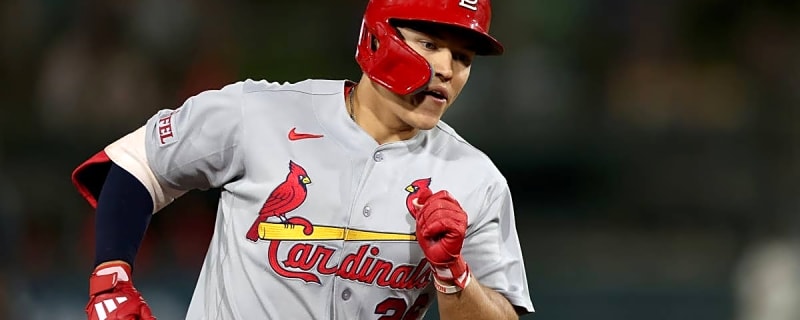
JJ Wetherholt Receives Major Recognition in Latest MLB Poll
Since making his major league debut this season, rookie second baseman JJ Wetherholt has completely revitalized the St. Louis Cardinals. In his first major league game, Wetherholt blasted a home run and instantly made his presence known.
St. Louis Cardinals News / Total Pro Sports / June 9

MLB Rumors: St. Louis Cardinals Linked To Flamethrower Reliever As Perfect Candidate
The St. Louis Cardinals have surprised many with their performance this season. The team is putting up some good numbers as they remain second in the NL Central.
St. Louis Cardinals News / Total Pro Sports / June 8

Cardinals Legend Claims He Was Supposed To Be On Private Jet That Crashed In Flames With His Family — Pilot & Co-Pilot Pronounced Dead
A plane crashed on June 7 while on its way to pick up former MLB star Yadier Molina and his family. The Gulfstream 200 crashed in the Dominican Republic and tragically killed the two American pilots on board.
St. Louis Cardinals News / MLB Trade Rumors / June 8

Cardinals To Option Victor Scott II
The Cardinals are optioning center fielder Victor Scott II to Triple-A Memphis today, as first reported by KMOV’s Tamar Sher. Fellow outfielder Nathan Church will return from the 10-day IL today and take Scott’s roster spot, per Jeff Jones of the Belleville News-Democrat.
Dustin May News / Athlon Sports / June 7

Cardinals Facing Decision After Dustin May Trade Report
The St. Louis Cardinals may have to decide on their starting rotation. The Cardinals enter Sunday at 34-28, holding the top wild-card spot in the National League and second in the NL Central.
Breaking News
Trending News









Customize Your Newsletter
 +
+




Get the latest news and rumors, customized to your favorite sports and teams. Emailed daily. Always free!
MY ACCOUNT
SUBSCRIBE
ADVERTISE
JOBS
FAQ
PRIVACY POLICY COOKIE POLICY CONTACT US
ABOUT YARDBARKER TERMS OF SERVICE


PRIVACY POLICY COOKIE POLICY CONTACT US
ABOUT YARDBARKER TERMS OF SERVICE
Copyright 2026 YB Media, LLC. All rights reserved.
By using this site, you agree to our Terms of Service and Privacy Policy.
This site is for entertainment purposes only.
There is no gambling offered on this site.
Gambling Problem? Call 1-800-Gambler.

By using this site, you agree to our Terms of Service and Privacy Policy.
This site is for entertainment purposes only.
There is no gambling offered on this site.
Gambling Problem? Call 1-800-Gambler.