
-

-


Follow Us
-

 On Facebook
 On Flipboard


 Free Newsletters
 On YouTube
MLB News / Field Level Media / June 30
Miscounted outs error hands Rangers sixth straight win vs. Guardians
Cleveland left fielder Cooper Ingle threw the ball into the stands, incorrectly thinking it was the third out of the seventh inning, to bring home Ezequiel Duran as the go-ahead run as the visiting Texas Rangers beat the Guardians 4-2 on Tuesday night.
Tanner Bibee News / Covering the Corner / June 30
Strong Pitching but Weak Offense in Guardians Loss 
Jacob deGrom and Tanner Bibee faced off in game two of the three game series. Both pitchers had great outings, with Bibee going a full seven innings of work.
Cleveland Guardians News / ESPN / June 30
Guardians rookie tosses ball in stands, allows run...
Guardians rookie left fielder Cooper Ingle lost track of the number of outs in the seventh inning Tuesday night and casually tossed the live ball into the stands as a souvenir, allowing the Rangers to score the go-ahead run.

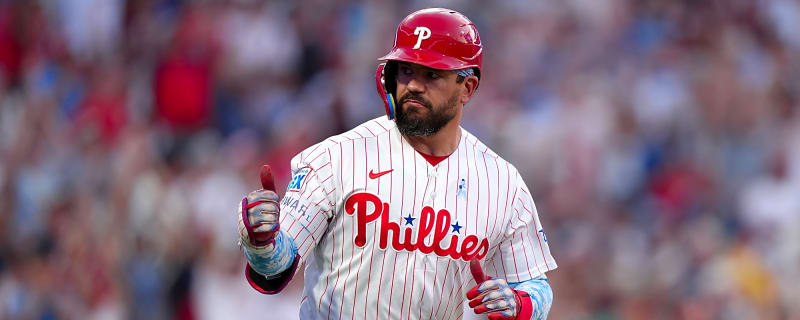
The 'Active MLB XBH leaders' quiz
How many of the active MLB players to rack up at least 500 extra base hits in their career can you name in five minutes?
Travis Bazzana News / Athlon Sports / June 30
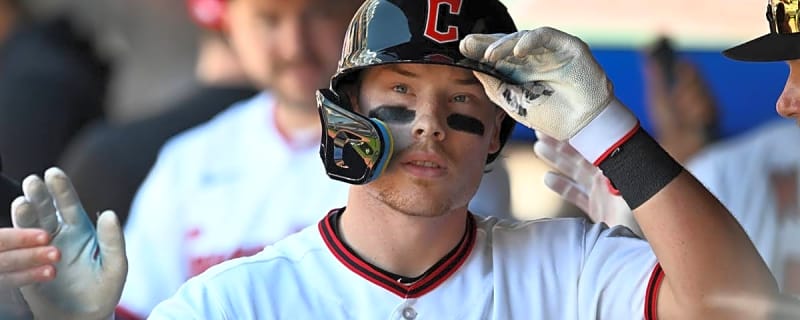
Travis Bazzana's Platoon Split Is Real -- Here's How to Use It in Your Daily Lineup
Here is the verdict before anything else: start Travis Bazzana against right-handers, every single time, and bench him against lefties with the same consistency you use to lock your front door.

25 MLB players most likely to be traded by the deadline
The MLB Trade Deadline has been quieter in recent years, in part due to playoff expansion, but 2026 is shaping up to be a more exciting one with several big names.
Stephen Vogt News / Covering the Corner / June 30
Guardians News: If They Bunt Again, I Quit
Last night was a rough one for Guardians fans. Two absolutely inexplicable bunts. Two pop up outs on those bunts. Stephen Vogt not recognizing that although Messick’s pitch count was low, he was running on fumes.

Chris Paddack News / Covering the Corner / June 29
Guardians Lose to Old Nemesis Chris Paddack
In six career appearances against Cleveland, Chris Paddack has a 3.14 ERA. In 114 appearances against every other team in MLB, Chris Paddack has a 4.95 ERA.
Parker Messick News / Cleveland Guardians on SI / June 29

Parker Messick Pitches Another Deep Outing, Guardians Fall to Rangers at Home
Parker Messick looked solid on the mound in Monday night's outing against the Texas Rangers. But when the coaching staff asked him to face the Rangers’ lineup for a fourth time, cracks in his game began to show.
Chase DeLauter News / Cleveland Guardians on SI / June 29
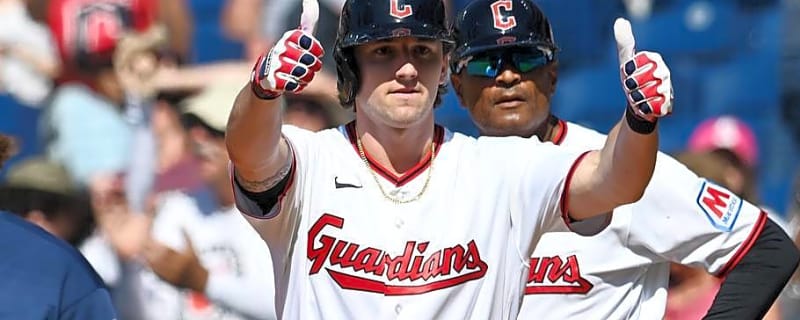
Guardians Rookie Chase DeLauter Glad To Return From Injury, Felt Lonely While Injured
Cleveland Guardians rookie outfielder Chase DeLauter was itching to get back onto the diamond. "Watching the team on TV from back here... it kind of gets lonely, to be honest, but you know, then you get back here, and that's the only thing you think about is itching to get back on the field," the 24-year-old said on Sunday afternoon.
Cleveland Guardians News / Cleveland Guardians on SI / June 29

3 Former Guardians Prospects Enjoying Success in 2026 After Leaving Cleveland
The Cleveland Guardians have always been known to produce some of baseball's top prospects. While not all of them end up panning out at the highest level of the game, some do.
MLB News / MLB on ClutchPoints / June 29

2 trades Guardians must make to leave White Sox in the dust in AL Central
The Cleveland Guardians and Chicago White Sox are locked in a tight division race in the American League Central standings. The Minnesota Twins are not too far behind at the moment as well.


25 MLB players who could be first-time All-Stars in 2026
Being named to the Midsummer Classic is one of the biggest honors for MLB players. These 25 players have a chance to make their first All-Star appearance in 2026 based on their first-half performances.
Chase DeLauter News / Field Level Media / June 29

Chase DeLauter back in big way as Guardians take on hot Rangers
Chase DeLauter will be sorry to see the Seattle Mariners leave town. The Cleveland outfielder, activated from the injured list (fractured rib) Sunday, went 2-for-5 and delivered a tying two-run single in a decisive five-run eighth inning of the 6-5 win.
Cleveland Guardians News / Field Level Media / June 28

Rhys Hoskins caps comeback as Guardians edge Mariners
Rhys Hoskins' tiebreaking two-run double capped a five-run eighth inning as the Cleveland Guardians rallied for a 6-5 victory against the visiting Seattle Mariners on Sunday afternoon.



Cleveland Guardians News / Covering the Corner / June 28
Cleveland Takes Series from Seattle in Sunday Victory
Gavin Williams had to work a bit extra this outing, throwing 103 pitches in 5.0 innings. He allowed 3R/2ER on six hits and three walks, striking out six batters.
Cleveland Guardians News / Covering the Corner / June 28
The Guardians’ Stone Soup Approach
— by Mario Crescibene In my most recent article portraying the Guardians as knights of the Round Table, one reader commented: Enchanting, sir Knight. However I must warn thee that the denizens of yonder woods feast on meat and potatoes, while Shakespearean tales of yore leave them most chilled.
Chase DeLauter News / Athlon Sports / June 28

Guardians Make Chase DeLauter Decision on Sunday
Cleveland Guardians outfielder Chase DeLauter has been activated from the 10-day injured list Sunday, returning one of the club's top young hitters after missing time with a small rib fracture and bone bruising.
Cooper Ingle News / Yardbarker / June 26

Guardians' youth movement continues with Cooper Ingle promotion
The Cleveland Guardians' youth movement is in full force. Another potential building block for the future is about to get his chance.
Cleveland Guardians News / Yardbarker / June 25

MLB Players Association reportedly proposes ban on player prop bets
The Major League Baseball Players Association has proposed a ban on all individual player prop bets.
Cleveland Guardians News / MLB on ClutchPoints / June 24

Guardians get massive injury update as lineup continues to struggle
Things are not going well for the Cleveland Guardians right now. The Guardians have lost their lead in the American League Central while also dealing with multiple injuries.
George Valera News / MLB Trade Rumors / June 21

Guardians Outright George Valera
Outfielder George Valera has cleared waivers, according to MLB.com’s Tim Stebbins. The Guardians designated Valera for assignment earlier this week, and since Valera isn’t eligible to decline an outright assignment, he’ll now be removed from Cleveland’s 40-man roster and outrighted to Triple-A Columbus.
Steven Kwan News / Athlon Sports / June 16

Steven Kwan's Contact Profile Has Fallen Off a Cliff, and the Numbers Say It Could Have Been Worse
Sometimes, hitters have a slow start to the season. Batting average won’t match underlying metrics and at-bat quality, but everything squares itself out as the season progresses.
Austin Hedges News / Total Pro Sports / June 15

Austin Hedges’ Fianceé Lexi Dickinson Takes Bridal Era To Progressive Field With Stunning Images
Austin Hedges and Lexi Dickinson have already turned Progressive Field into part of their love story. Now, the Cleveland Guardians catcher’s fiancée is giving us another glimpse into that journey as wedding preparations take center stage.
Travis Bazzana News / Just Baseball / June 15

Travis Bazzana Has Wasted No Time Making an Impact
After an offseason filled with uncertainty of who would stay and who would leave, the Cleveland Guardians haven’t let it get to them to start the 2026 season.
Cleveland Guardians News / Larry Brown Sports / June 13

Guardians hit with brutal Jose Ramirez injury news
The Cleveland Guardians will have to soldier on without Jose Ramirez for what is expected to be an extended absence. Ramirez hurt his hand during Friday’s game against the Detroit Tigers and underwent testing after the contest at Progressive Field in Cleveland, Ohio.
Jose Ramirez News / Yardbarker / June 14

Guardians get brutal update on Jose Ramirez
The Cleveland Guardians path to the postseason became a lot more difficult on Saturday.
Breaking News
Trending News









Customize Your Newsletter
 +
+




Get the latest news and rumors, customized to your favorite sports and teams. Emailed daily. Always free!
MY ACCOUNT
SUBSCRIBE
ADVERTISE
JOBS
FAQ
PRIVACY POLICY COOKIE POLICY CONTACT US
ABOUT YARDBARKER TERMS OF SERVICE


PRIVACY POLICY COOKIE POLICY CONTACT US
ABOUT YARDBARKER TERMS OF SERVICE
Copyright 2026 YB Media, LLC. All rights reserved.
By using this site, you agree to our Terms of Service and Privacy Policy.
This site is for entertainment purposes only.
There is no gambling offered on this site.
Gambling Problem? Call 1-800-Gambler.

By using this site, you agree to our Terms of Service and Privacy Policy.
This site is for entertainment purposes only.
There is no gambling offered on this site.
Gambling Problem? Call 1-800-Gambler.