
-

-


Follow Us
-

 On Facebook
 On Flipboard

 Free Newsletters
 On YouTube
Stefon Diggs News / The Lead / June 29
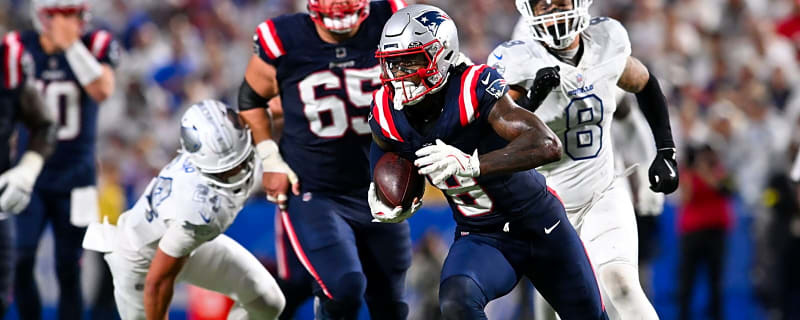
What Would Bills Have to Do to Justify Signing Stefon Diggs?
As of June 29, former Buffalo Bills wide receiver Stefon Diggs remains a free agent. This follows his release from the division rival Patriots, with whom he signed a three-year deal last offseason.
Dalton Kincaid News / Buffalo Bills on SI / June 28

Bills' TE Dalton Kincaid: Oft-Injured But Key Weapon Lands at No. 15
As the team enjoys its summer break, Bills On SI will unveil its Top 25 Player Rankings (based upon expected impact) for the 2026 season. The ranking methodology is based on positional value, past performance and expectations for any player.
Buffalo Bills News / Buffalo Bills on SI / June 28

Three Buffalo Bills Playing For a Contract Extension in 2026
The 2025 offseason was a busy one for Buffalo Bills general manager Brandon Beane, who agreed to several contract extensions with some of the team's top players.

The '100-rushing-yard NFL QBs' quiz
In the Super Bowl era (1966 to present) of the NFL, a total of 30 QBs have rushed for 100 yards or more in a regular-season game. How many of the 30 can you name in five minutes?
Buffalo Bills News / Pro Football Rumors / June 28

Kaleb Elarms-Orr, Dorian Williams Competing For Bills No. 2 LB Job
The Bills parted ways with longtime starting linebacker Matt Milano this offseason, leaving a vacancy next to Terrel Bernard in the middle of their defense.
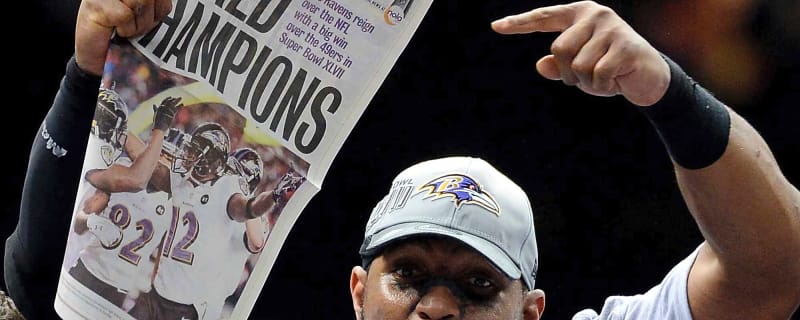
The greatest all-time linebacker in for every NFL franchise
Yardbarker's best-of NFL positional series continues with linebackers. This does not cover pure pass-rushing threats -- we will get to them -- but rather true off-ball defenders who thrived as traditional inside and outside 'backers.
Buffalo Bills News / Athlon Sports / June 28

5 Best Wide Receivers in Buffalo Bills History
The modern-day Buffalo Bills franchise predates the 1970 AFL-NFL merger by a decade, and while they still haven't lifted a Super Bowl trophy, some all-time legends have called the city home.
Buffalo Bills News / Athlon Sports / June 28

5 Best Running Backs in Buffalo Bills History
Although the Buffalo Bills are still seeking their first Super Bowl title, you can’t pin their lack of championships on running back talent. James Cook follows the likes of O.J.
Buffalo Bills News / Athlon Sports / June 28

5 Best Quarterbacks in Buffalo Bills History
Josh Allen and the Buffalo Bills enter the 2026 NFL season chasing their first Super Bowl title, hoping that a recent string of changes — including replacing coach Sean McDermott with offensive coordinator Joe Brady — will bring them back to the Big Game.
Buffalo Bills News / Buffalo Bills on SI / June 28

Bills’ Rookie T.J. Parker Destined to 'Hit Somebody,' Plans to Bring Pain to Opponents
For Buffalo Bills rookie outside linebacker T.J. Parker, that’s exactly what unfolded along his football path this spring when his ultimate football dreams were realized after the Bills selected him with the 35th overall pick in the 2026 NFL Draft.
Oj Simpson News / Ball Exclusives / June 28

Buffalo Bills decline to honor O.J. Simpson at new stadium
As the Buffalo Bills prepare to make the move to the new Highmark Stadium after over 50 years at Ralph Wilson Stadium, the team announced that runningback O.J.

The way-too-early 2027 NFL first-round mock draft
With the 2026 draft in the books, teams are already looking toward 2027. Here's our way-too-early 2027 NFL mock draft, as of April 27, 2026.


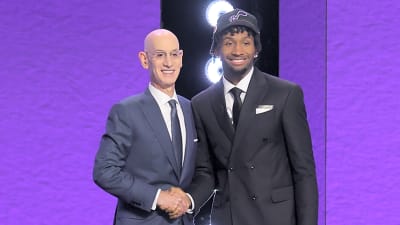


Buffalo Bills News / Buffalo Bills on SI / June 28
Tom Grossi's Million-Dollar Charity Event Resonates Deeply With Bills Mafia
BUFFALO, N.Y. -- He's Tom "Mother-loving" Grossi. Hundreds of Tom Grossi fans flooded Southern Tier Brewing Company on Monday in Buffalo, the home of the Bills, to celebrate the 2023 NFL Fan of the Year's 30 in 30 Part Deux fundraiser event, his 25th in 30 days of traveling to 30 NFL cities.
Buffalo Bills News / Buffalo Bills on SI / June 28

Three Primary Reasons Buffalo Bills Will Reclaim AFC East Title in 2026
A five-year reign as the AFC East champions came to an end for the Buffalo Bills in 2025. They finished with a 12-5 record, which was good enough for a playoff berth, but the New England Patriots claimed the division with a 14-3 record.
Oj Simpson News / Field Level Media / June 27
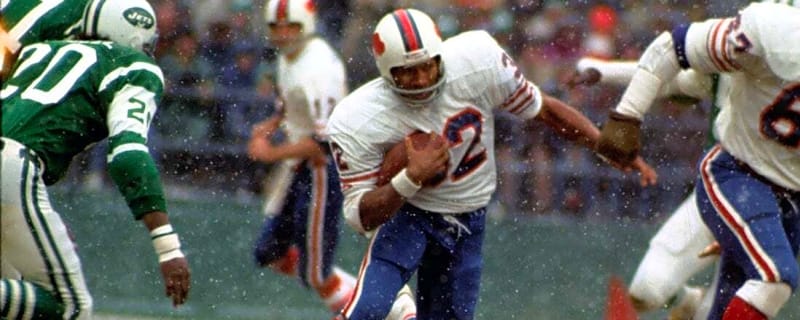
Bills decide O.J. Simpson will not be in 'Wall of Fame' at new stadium
Pro Football Hall of Famer O.J. Simpson was the first member of the Buffalo Bills' Wall of Fame in 1980 but he won't be honored at the soon-to-open Highmark Stadium.
Oj Simpson News / Larry Brown Sports / June 27
Bills decide on whether to honor OJ Simpson at their new stadium
The Buffalo Bills had a decision to make on whether to acknowledge OJ Simpson at their new stadium.
Buffalo Bills News / Buffalo Bills on SI / June 27

Four Realistic Trades Bills Could Still Make in July
General manager Brandon Beane will have plenty of pressure on him this season. After their seventh consecutive trip to the playoffs, the Buffalo Bills fired head coach Sean McDermott, and gave Beane more power over the organization.
C.J. Gardner-Johnson News / Larry Brown Sports / June 27

C.J. Gardner-Johnson has wild theory about his Texans release
C.J. Gardner-Johnson, the veteran safety now with the Buffalo Bills, has offered perspective on his surprising release by the Houston Texans early in the 2025 season.
Joey Bosa News / Larry Brown Sports / June 26

Joey Bosa is reportedly considering retirement
Joey Bosa remains unsigned with the calendar about to turn over to July, and it might stay that way. In the latest edition of his podcast, ESPN’s Adam Schefter suggested that Bosa has likely played his final NFL down and will retire.
Buffalo Bills News / NFL on ClutchPoints / June 26

Bills’ C.J. Gardner-Johnson guarantees Super Bowl win alongside Josh Allen
The Buffalo Bills signed safety CJ Gardner-Johnson to a $6 million contract over the offseason. He now has lofty expectations for his newest organization.
Buffalo Bills News / NFL Analysis Network / June 26

What to expect from Buffalo Bills’ first season in their new stadium, based on NFL history
The Buffalo Bills will be the latest NFL team to move into their new stadium in September when the 2026 season gets underway. Having waved goodbye to the old Highmark Stadium, the Bills will welcome the Detroit Lions in week two for their first competitive game in their new home.
Buffalo Bills News / Yardbarker / June 26

Josh Allen opens up about Super Bowl goal, Bills replacing Sean McDermott with Joe Brady
During a recent NFL Network appearance, Allen indicated nothing has changed about his long-term goals since he last took the field.
Buffalo Bills News / NFL on ClutchPoints / June 25

ESPN analyst dumps more hate on DJ Moore trade with brutal ranking
The Buffalo Bills have a lot to be excited about ahead of the 2026 season. Buffalo still has one of the better rosters in the NFL and will christen a brand new stadium this fall.
Buffalo Bills News / Yardbarker / June 25
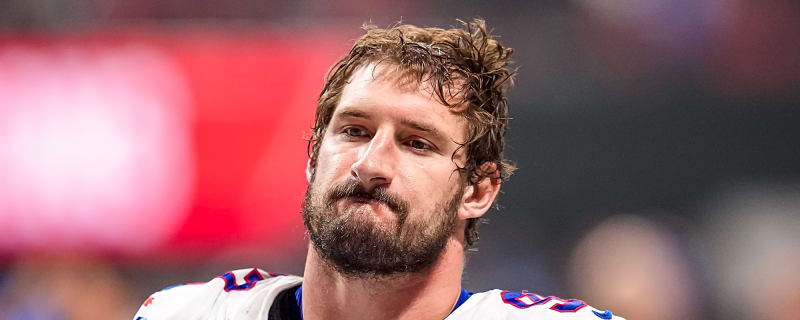
Massive Joey Bosa update emerges amid free-agency rumors
Veteran defensive end Joey Bosa remained a free agent through the start of the NFL's summer break.
Keon Coleman News / Viral Sports News / June 25

Buffalo Bills WR Could Be Cut Before the Season Starts
The Buffalo Bills’ front office has offered reassuring words to wide receiver Keon Coleman following his uneven performance in the 2025 campaign, yet questions linger over whether those endorsements will secure his place on the roster heading into the next season.
Buffalo Bills News / Pro Football Rumors / June 24

Bills, O’Cyrus Torrence Interested In Extension
The Bills lost left guard David Edwards to the Saints when free agency opened in March. They would like to avoid a similar fate with right guard O’Cyrus Torrence in 2027.
Brandon Beane News / A to Z Sports / June 24

Bills have 10 fascinating reunion candidates who general manager Brandon Beane could target for the 2026 season
Buffalo has experimented with a lot of alternatives over the past few years, and these old friends could make sense for the current roster. The Buffalo Bills have a strong roster, with a few stars and solid depth.
Jim Kelly News / Yardbarker / June 23

Buffalo Bills legend Jim Kelly feeling 'good' after suffering a stroke
Pro Football Hall of Famer Jim Kelly is on the mend after suffering a stroke earlier this year.
Joe Brady News / A to Z Sports / June 23

Joe Brady has flipped the Buffalo Bills’ culture on its head and players are loving every bit of it so far during the offseason
Sometimes a relationship simply runs its course and a fresh start is needed. Joe Brady is giving the Buffalo Bills just that as its new head coach. Attention to detail and discipline are key elements needed to win games in the NFL, but it’s also important for players to have fun.
Breaking News
Trending News







Customize Your Newsletter
 +
+




Get the latest news and rumors, customized to your favorite sports and teams. Emailed daily. Always free!
MY ACCOUNT
SUBSCRIBE
ADVERTISE
JOBS
FAQ
PRIVACY POLICY COOKIE POLICY CONTACT US
ABOUT YARDBARKER TERMS OF SERVICE


PRIVACY POLICY COOKIE POLICY CONTACT US
ABOUT YARDBARKER TERMS OF SERVICE
Copyright 2026 YB Media, LLC. All rights reserved.
By using this site, you agree to our Terms of Service and Privacy Policy.
This site is for entertainment purposes only.
There is no gambling offered on this site.
Gambling Problem? Call 1-800-Gambler.

By using this site, you agree to our Terms of Service and Privacy Policy.
This site is for entertainment purposes only.
There is no gambling offered on this site.
Gambling Problem? Call 1-800-Gambler.