
-

-


Follow Us
-

 On Facebook
 On Flipboard


 Free Newsletters
 On YouTube
Texas Rangers News / Lone Star Ball / June 21
Thoughts on a 4-3 Rangers win 
Rangers 4, Padres 3 That was a good game that the Texas Rangers should’ve won, and did won. I like when that happens. Especially given how down the vibes were coming into the game.

MLB News / Lone Star Ball / June 21
37-40 – Rangers love their fathers, defeat Padres 4-3
The Texas Rangers scored four runs while the San Diego Padres scored three runs. It feels mildly inappropriate to beat the Padres on Father’s Day but the Rangers were perhaps finished with niceties after securing a losing homestand with an extra innings defeat yesterday.
Texas Rangers News / ESPN / June 21
Rangers' Leiter (ankle) to IL; Seager remains out
The Rangers have placed Jack Leiter on the 15-day injured list with an ankle issue the right-hander has been battling most of the season, while star shortstop Corey Seager still isn't ready to return from a concussion.


The 'Most K's through 30 MLB starts' quiz
How many of the starting pitchers in the MLB Live-Ball Era (since 1920) to strike out at least 180 batters in their first 30 starts can you name in six minutes?
Jack Leiter News / Field Level Media / June 21

Rangers place RHP Jack Leiter (ankle) on 15-day IL
Texas Rangers right-hander Jack Leiter was scheduled to start against the Miami Marlins on Tuesday, but he landed on the 15-day disabled list on Sunday, retroactive to Friday, due to a right ankle impingement.
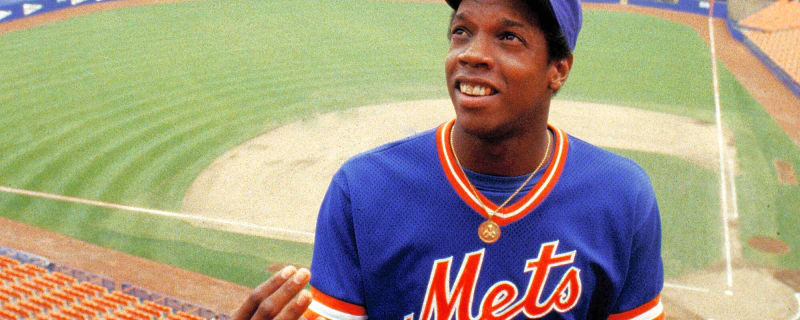
The 25 greatest rookie seasons in MLB history
Not every all-timer has instant success at the next level. For many baseball players, it takes a few bumps in the road out of the gate before they ever reach stardom.
MLB News / Texas Rangers on SI / June 21
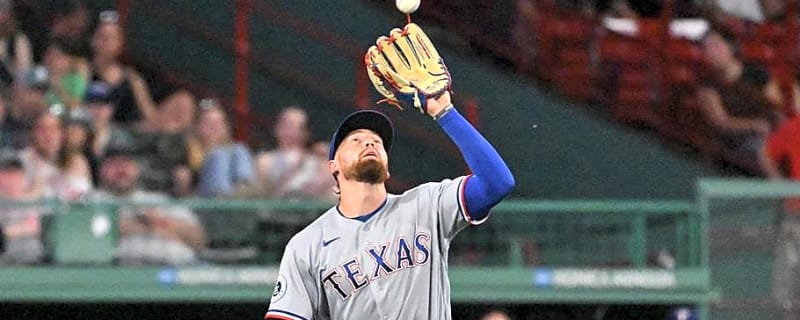
Rangers Set Lineup as Padres Settle on Bullpen Game for Series Finale
Most of the time, the Texas Rangers know who the starting pitcher for the opponent when they set their lineup. The Rangers didn't quite have that luxury when they woke up on Sunday morning.
Texas Rangers News / Lone Star Ball / June 21
Minor league update for 6/20/26
Hickory starter A.J. Russell struck out five in 3.2 shutout innings. In his last five outings, he has allowed two runs in 15.1 innings, striking out 25 and walking five.
Texas Rangers News / Lone Star Ball / June 21
Sunday morning Rangers things
Good morning, folks… The Texas Rangers fell to the San Diego Padres yesterday by a score of 6-4. Shawn McFarland’s game story talks about the problems the Rangers have in the bullpen when they get past Jakob Junis and Jacob Latz.

Which 20 players have hit four home runs in an MLB game?
The only two things rarer in modern-day baseball than the four-homer game is the Triple Crown and the unassisted triple play. The former is, of course, done over an entire season, while there's a large level of lucky in the unassisted triple play.
Jordan Montgomery News / Texas Rangers on SI / June 21

Rangers Set Early Progression for Jordan Montgomery Rehab Assignment
If there is a watch word for Texas Rangers pitcher Jordan Montgomery’s injury rehab path it’s gradual. That is no surprise for a pitcher that underwent Tommy John surgery in 2025 and hasn’t pitched in a game since the end of the 2024 season.
Nathan Eovaldi News / Texas Rangers on SI / June 20
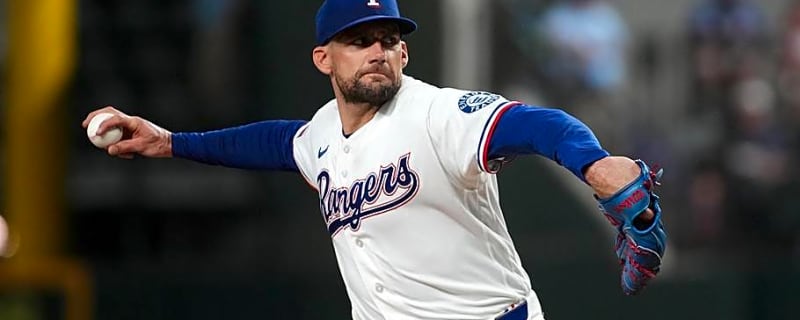
Rangers Will Start Nathan Eovaldi on Sunday In Padres Finale
Texas Rangers manager Skip Schumaker hoped that Saturday’s scratch of Nathan Eovaldi was nothing more than a precaution. It was After Saturday's 6-4 loss to the San Diego Padres, manager Skip Schumaker said that Eovalid would take the ball on Sunday against the San Diego Padres, one day after he was scratched for left knee soreness.

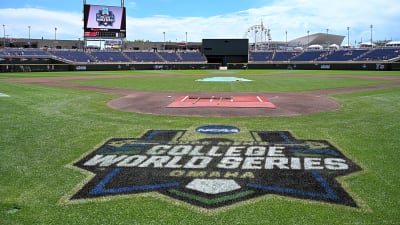


MLB News / Lone Star Ball / June 20
36-40 – Rangers fall apart late for 6-4 loss to Padres in 10
The Texas Rangers scored four runs while the San Diego Padres scored six runs in ten innings. Miracles are real but be careful what you wish for. The Rangers didn’t allow a home run in the first inning for the first time during this entire homestand.
Jake Burger News / Texas Rangers on SI / June 20

Rangers' Jake Burger Remains in Game After Being Hit By Pitch vs. Padres
Texas Rangers first baseman Jake Burger took a pitch to his right hand during his at-bat in the ninth inning of Saturday’s game wth the San Diego Padres.
Corey Seager News / Texas Rangers on SI / June 20

Here's What is Holding Corey Seager Back From Rangers Injury Activation
The Texas Rangers had hoped they would have shortstop Corey Seager back for Friday's game with the San Diego Padres. That didn't happen. Seager wasn't in the Rangers' lineup for Saturday's game either.
Texas Rangers News / Lone Star Ball / June 20
Texas Rangers lineup for June 20, 2026
Texas Rangers lineup for June 20, 2026 against the San Diego Padres: starting pitchers are MacKenzie Gore for the Rangers and Walker Buehler for the Padres.
Nathan Eovaldi News / Field Level Media / June 20

Rangers scratch RHP Nathan Eovaldi (knee) vs. Padres
Texas Rangers right-hander Nathan Eovaldi has been scratched from Saturday's start against the visiting San Diego Padres due to left knee soreness. The Rangers will turn to left-hander MacKenzie Gore to start the second contest of their three-game series against the Padres in Arlington, Texas.
Texas Rangers News / MLB Trade Rumors / June 19
Rangers Option Josh Smith, Select Jarred Kelenic
The Rangers announced that they have selected the contract of outfielder Jarred Kelenic. Infielder Josh Smith has been optioned to Triple-A Round Rock as the corresponding active roster move.

The 'Most 250-K MLB seasons' quiz
How many of the 25 MLB pitchers in the Live-Ball Era to strikeout at least 250 batters in multiple seasons can you name in five minutes?
Texas Rangers News / BoxingNews.com / June 16
Garcia wants Rodriguez unification fight before Inoue clash
Robert Garcia wants Jesse 'Bam' Rodriguez to fight for a second bantamweight title before chasing Naoya Inoue. Garcia, who trains and manages Rodriguez, told DAZN after Saturday's sixth-round stoppage of Antonio Vargas that he wants the San Antonio southpaw to face WBO titleholder Christian Medina in a unification bout at 118 pounds.
Texas Rangers News / MLB Trade Rumors / June 15

Rangers Place Corey Seager On Concussion-Related IL
The Rangers have placed shortstop Corey Seager on the seven-day concussion-related injured list. Infielder/outfielder Josh Smith has been reinstated from the 10-day IL in a corresponding move.
Texas Rangers News / Athlon Sports / June 15
How Rangers' Super Utility Man Has Fared Since Beginning Rehab Assignment
The Texas Rangers have been without one of their most versatile players for much of the 2026 season. Josh Smith, 28, has been sidelined since May 3 with a combination of a glute strain, wrist soreness, and viral meningitis.
Texas Rangers News / MLB Trade Rumors / June 13

Rangers Place Evan Carter On 10-Day IL With Oblique Strain
Rangers outfielder Evan Carter is heading to the 10-day injured list with a right oblique strain, the team announced. The Rangers recalled infielder/outfielder Cody Freeman from Triple-A Round Rock to take Carter’s roster spot.
MLB News / Larry Brown Sports / June 12

Seth Lugo exits game after taking a 107 mph line drive to the head
Seth Lugo was involved in an absolutely terrifying moment during Wednesday’s game.
Breaking News
Trending News












Customize Your Newsletter
 +
+




Get the latest news and rumors, customized to your favorite sports and teams. Emailed daily. Always free!
MY ACCOUNT
SUBSCRIBE
ADVERTISE
JOBS
FAQ
PRIVACY POLICY COOKIE POLICY CONTACT US
ABOUT YARDBARKER TERMS OF SERVICE


PRIVACY POLICY COOKIE POLICY CONTACT US
ABOUT YARDBARKER TERMS OF SERVICE
Copyright 2026 YB Media, LLC. All rights reserved.
By using this site, you agree to our Terms of Service and Privacy Policy.
This site is for entertainment purposes only.
There is no gambling offered on this site.
Gambling Problem? Call 1-800-Gambler.

By using this site, you agree to our Terms of Service and Privacy Policy.
This site is for entertainment purposes only.
There is no gambling offered on this site.
Gambling Problem? Call 1-800-Gambler.