The MLB Draft doesn’t get the same attention as the NFL Draft…or the NBA Draft…or even the NHL Draft. There’s the element of a stay in a farm system, the general lack of immediate impact for MLB draft picks, and the fact that it’s tougher for one MLB player to turn a franchise’s fortunes around. That being said, the MLB Draft is interesting, and it is important, and nailing the first-overall pick can give you a franchise player. Or, it can set you back. With that in mind, let’s take a look back at every first-overall pick in the MLB Draft since 2000.
1 of 27
2000: Adrian Gonzalez
Tom Szczerbowski/Imagn Images
When it comes to drafts, it’s not particularly valuable to deduce if somebody should have been the first pick in a particular class, but whether or not they lived up to their draft positioning. For example, naturally you’d take Michael Jordan first overall, but the Rockets were plenty happy to have Hakeem Olajuwon, and he was worth being picked first overall. We’re saying that here to set the standard for the rest of this piece. Also, the only guy you’d clearly take ahead of Gonzalez in this class is Chase Utley, who went 15th, so obviously nobody saw that coming. Gonzalez, taken as a high school first baseman by the Marlins, made five All-Star Games and won four Gold Gloves. Of course, he never played for the Marlins, as he was part of a trade for reliever Ugueth Urbina. Yes, the Marlins traded their first-overall pick and a future All-Star for a reliever on an expiring contract. There’s a reason that franchise has mostly flailed.
Bruce Kluckhohn/Imagn Images
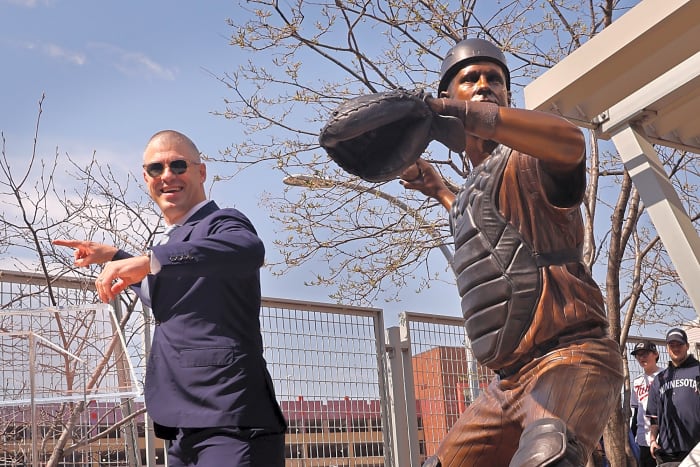
The Twins had a question to answer heading into the 2001 MLB Draft. Would that take the local high school kid, Mauer, or the venerated pitching prospect Mark Prior? Minnesota opted for Mauer. He played his entire career with the Twins, won three batting titles and an MVP, and made the Hall of Fame. Yeah, good pick.
Gary A. Vasquez/Imagn Images
“Signability” used to be more of a thing with the MLB Draft. Things aren’t etched in stone even now, but there are guardrails in place that used to not be there. It was thus also more common for high schoolers to play hardball (fittingly enough) with the threat of potentially going to college in lieu of signing. That actually happening was rare, but agents could use it for maneuvering purposes. All that is to say that the Pirates took college pitcher Bullington first overall, and second-overall pick B.J. Upton signed for more money. Another pitcher, high schooler Adam Loewen, went fourth and signed for only $800,000 less than Bullington. None of those guys had good MLB careers, but Bullington only pitched in 26 MLB games and posted a 5.62 ERA.
4 of 27
2003: Delmon Young
Jesse Johnson/Imagn Images
The year 2003 was good for the Young brothers. Dmitri had his best MLB season and made the All-Star Game with the Tigers, and Delmon was the first-overall pick, going to the Rays. Delmon did perform well in the minors, but he did little in the majors. We can only speculate so much, but this is a guy who was once suspended 50 games in the minors for throwing his bat at an umpire, and he was arrested twice in his career for ethnically motivated crimes. All that is to say he may have had some issues that got in the way of playing baseball.
Michael McLoone/Imagn Images
At the time, Bush was looked at as a bit of a compromise candidate for the Padres. Scott Boras, who in theory was motivated to do well by his clients but in practice hurt them almost as often as he helped them, made it clear it would take a lot of cash to sign either Jered Weaver or Stephen Drew, and indeed they both went in the middle of the first round for more money than Bush. Credit where it’s due, Weaver did end up being the third-best player in this class, and nobody saw Dustin Pedroia coming. Of course, the big “What could have been” is the Padres going with Bush, a high school shortstop, over Justin Verlander, the best pitcher of his generation. Look, Bush was, and is, a troubled person. The substance abuse is one thing; the violent assaults make him decidedly less sympathetic. He destroyed his career, and he’s serving a 10-year prison sentence with parole eligibility coming in 2030.
Jayne Kamin-Oncea/Imagn Images
On a lighter note, this was a stacked draft class, and Upton was a perfectly fine player to take first overall! In the first 12 picks, eight future all-stars were taken. Justin, the younger brother of B.J., made four All-Star Games, won three Silver Sluggers, and once finished fourth in NL MVP voting. By no means a great player, but definitely a very-good player, and that’ll work just fine for a first-overall pick.
Denny Medley/Imagn Images
Oof. Okay, so we said we weren’t going to do the “But you could have had…” thing, but this is an exception for two reasons. One, Hochevar was a bust, as he finished his career with a 4.98 ERA and 3.8 bWAR. Two, in the first round of this draft, Tim Lincecum, Max Scherzer, and Clayton Kershaw were all drafted. If you were wondering, they all signed for less than Hochevar did. That’s two guys in the running alongside Verlander for the best pitcher of this generation and a guy who won two Cy Youngs before his arm gave out on him. That’s hard to overlook.
8 of 27
2007: David Price
Brad Rempel/Imagn Images
A star at Vanderbilt, it was a lock that the Rays, then still bedeviled, would take the pitcher first. They did, and all things considered, he lived up to the hype. Price was a great pitcher, and he’s a borderline Hall of Famer. Truly, he’s one of those guys where either way you can see the fairness in the call. Price won a Cy Young, twice finished second, twice led the AL in ERA, and twice led MLB in innings pitched. As far as reasonable hopes go, that’ll definitely work for a top pick.
Gregory Fisher/Imagn Images
You can’t win ‘em all! Tampa was doing a lot of losing back in the day, as it picked first again in 2008. Price was a strong pick, but this time the Rays took high school shortstop Beckham. To be fair, Beckham was considered by many the best high school prospect in this draft class, and the only really standout player taken in the first round was Buster Posey. Well, Gerrit Cole was taken 28th by the Yankees out of high school, but he didn’t sign and went to college. He’ll come up again later.
Brett Davis/Imagn Images
It was expected that a future star was coming out of this first round, and that proved true. He just happened to be named Mike Trout and not Stephen Strasburg. Strasburg was as vaunted a pitching prospect as recent memory had served up, but he’s also a reminder of why pitching prospects can break your heart. Strasburg was a really good pitcher for the Nationals, making three All-Star Games and finishing in the top five in Cy Young voting twice. However, after the 2019 season, injuries kept him off the field consistently. He last pitched in 2022, retired in 2024, and was effectively done as an MLB pitcher at 30.
Tommy Gilligan/Imagn Images
We have our first player still active in MLB! In 2009, the Nationals drafted a much-hyped pitching prospect in Strasburg. In 2010, the Nationals drafted one of the most-hyped prospects ever. Harper was on the cover of “Sports Illustrated” as a teenager, and he debuted in MLB as a teenager. All things considered, reasonably speaking, Harper lived up to the hype. We mean, he’s a two-time MVP and a future Hall of Famer. Sure, he’s going to end up being as good as, say, Freddie Freeman as opposed to Barry Bonds. That’s certainly worthy of being the first overall pick and of the buzz and hype around a teenager.
Charles LeClaire/Imagn Images
We mentioned Cole would be back, and here he is. After not signing with the Yankees out of high school, Cole went to UCLA and the move panned out. He emerged as the top pick in the 2011 class and got a bananas signing bonus. Cole was also drafted by the Pirates, but he did not remain there long. After signing a one-year deal with the wayward franchise, the Pirates traded him to the Astros, where he finished in the top five in Cy Young voting twice in as many seasons. Then, the Yankees finally got their man, signing their one-time draft pick to a massive free agency deal. Cole has delivered to them three top-four finishes in the Cy Young voting, including one win. He did miss the 2025 season with injury, and he’s now past his peak, but Cole has delivered on being a top pick. Mostly for the Yankees rather than the team that drafted him, but nevertheless!
Matthew Emmons/Imagn Images
This was the first draft with the slotting system that changed bonus structures, but there was still room for maneuvering. The Astros, for example, surprised some by taking Puerto Rican shortstop Correa first, using the money saved in their bonus pool to spend on pitcher Lance McCullers, who was a good pitcher until his arm turned to pudding. Plus, in the end, Correa proved well worth the pick anyway. Correa won Rookie of the Year and has made three All-Star Games. He was selected over Byron Buxton, an incredible talent who played 100 games in one of his healthier seasons.
John E. Sokolowski/Imagn Images
Appel was taken eighth in the 2012 MLB Draft, but he did something remarkable: He didn’t sign and returned to college for his senior season. Being a senior in college is usually damaging to a player’s draft prospects, but not for Appel. He was drafted first overall by the Astros the next year. Also, the pick was a disaster. 10.1 innings. 10.1 innings, with the Phillies, is the entirety of Appel’s MLB career.
Minor League Baseball press photo
In one way, Aiken was a worse pick for the Astros than Appel. In another way, he was a better pick. Infamously, Houston took the southpaw pitcher out of high school and then didn’t sign him. The Astros were worried about his elbow, so they revised their bonus offer down $1.5 million. Aiken declined to sign. The Astros got cold feet, people speculated. They were pinching pennies, some asserted. Aiken had Tommy John surgery the next March owing to the exact elbow ligament the Astros said they were worried about. He never pitched in the majors. The next year, armed with the second-overall pick owing to compensation and the fifth-overall pick owing to being bad again, Houston took Alex Bregman and Kyle Tucker, two future all-stars.
Albert Cesare/The Enquirer/USA TODAY NETWORK via Imagn Images
Shortsightedness does a team in again. The Diamondbacks took shortstop Swanson first in 2015, and that December included him in a trade for pitcher Shelby Miller. Miller would post a 6.35 ERA in three seasons with Arizona. Now, it’s not like the Diamondbacks traded away the second coming of Alex Rodriguez. He was, and is, a flawed player, but he has power for a shortstop, and he’s made two All-Star Games and won two Gold Gloves. Swanson was a starter for Atlanta, and now he’s a starter for the Chicago Cubs, and he’s still in his early thirties. He’s akin to Justin Upton, a worthwhile first-overall pick but far from a Hall of Famer.
Kirby Lee/Imagn Images
Some good players emerged from the 2016 class, but the first all-star was drafted 30th, so nobody really gets credit for nailing it this year. This draft class is still recent enough that we are in the midst of Moniak’s third lease on life, and he might, we stress might, avoid being labeled a bust. He did nothing for the Phillies, but he was playable with the Angels, and now with the Rockies he’s excelled as a lefty who feasts on right-handed pitching at Coors Field. He’s already the second-best pick in the top 10, third at worst, which tells you everything about this class.
John Jones/Imagn Images
What if Byron Buxton had the same injury issues but less talent? That’s the story with his fellow Twin Lewis, a perfectly okay player who can’t stay on the field. The move was clear and reasonable, as the four guys taken after Lewis were all pitchers who got more, or effectively the same, signing bonus money. Plus, Lewis tore his ACL in the minors in 2021, made his MLB debut in 2022, and then tore the same ACL again. Unless his medicals screamed “Red alert on this ACL!” that’s just bad luck, and it’s a bummer for the player and the team.
Brad Penner/Imagn Images
Patience can pay off sometimes, especially with pitchers. Mize was a collegiate ace at Auburn, and after struggling in a cup of coffee run in 2020 (a normal year to begin with), he looked viable in 2021. Then, in 2022, a story all too familiar: Elbow injury, Tommy John surgery, a missed season. The 2024 campaign was an adjustment, but in 2025 Mize was good and made the All-Star Game, and in 2026 he looks, if not like an ace, like a strong number-two option in a rotation. The Tigers didn’t get the ace they hoped for, but they did get a good pitcher.
Jamie Sabau/Imagn Images
Catchers rarely go first overall, but Rutschman did just that after starring at Oregon State. This was a strong draft class (so we won’t be doing the “They could have had” thing), but a switch-hitting catcher with the capacity to stay at catcher was enticing to be sure. Rutschman has not been an MVP candidate, but he has been a three-time All-Star. Plus, as he ages into his thirties, his bat should play well enough for first base, or even DHing.
Brian Bradshaw Sevald/Imagn Images
Basically everybody gets a pass on the 2020 Draft, as the class wasn’t terribly good (though Pete Crow-Armstrong has emerged from being the 19th pick) and because the COVID-19 pandemic made evaluating these talents a nightmare. Torkelson was a star at Arizona State, but the risk the Tigers were taking was that he projected as a first baseman from the get-go, and that meant his bat really had to play. His bat has been fine. He has a couple of 30-homer seasons. The trajectory isn’t “bust,” but it is “not worth the top pick.”
Charles LeClaire/Imagn Images
The Pirates do have to be worrying that Davis will be a bust, though. He’s not quite 27, but he also has negative career bWAR. A catcher in college, the Pirates hoped his bat would play well enough that he could play in the outfield in MLB. That didn’t work, so they moved him back to catcher. However, his bat hasn’t been good enough to even play at catcher, and he’s no Gold Glover. There’s a good chance Davis will be out of MLB before he turns 30.
Jamie Sabau/Imagn Images
There are a lot of high picks in this class that have yet to debut, and not in a “They’re a bust” kind of way, so we can’t say too much about anybody, Holliday included. The son of Matt, Holliday was drafted out of high school by the Orioles and debuted in his age-20 season. While he’s had injury issues, Holliday has stuck in MLB, and he’s been…mediocre? Given his age, that’s not a bad thing. Someday, he’ll have to be good, but right now he’s viable, and viability when many of his fellow draftees are still in the minors is impressive.
Charles LeClaire/Imagn Images
Of course, Skenes has not merely been viable in MLB, but you can’t reasonably compare him to Holliday. The latter was a high schooler, while Skenes was a star at LSU. He debuted with the Pirates in 2024 and won NL Rookie of the Year. In 2025, he won the NL Cy Young. In 2026, he was an All-Star once again. Arguably, Skenes could retire today and the Pirates would have gotten sufficient value from a first-overall pick.
David Richard/Imagn Images
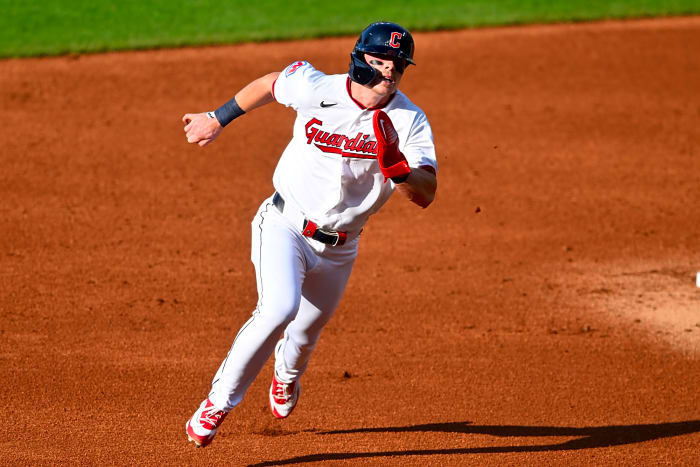
A rookie in 2026, Bazzana is the last player on this list to make his MLB debut. He’s also the second Oregon State player on this list. The Beavers have themselves an impressive program up in the Pacific Northwest. Plus, Bazzana is Australian, so that’s fun. The second baseman hasn’t even played a full season yet, but he’s looked capable. We can see an all-star in the making in Bazzana. The Guardians got themselves a promising player.
William Bretzger/Delaware News Journal/USA TODAY NETWORK via Imagn Images
As of this writing, no 2025 Draft picks have debuted in MLB. Willits, a high-school shortstop, was the top pick, but he likely won’t see MLB for at least a couple more years. He’s still a teenager and hasn’t even gotten to see how he can handle Double-A, much less MLB. The Nationals will have to wait, but for now they have CJ Abrams, so waiting is fine.
27 of 27
2026: Roch Cholowsky
Matt Marton/Imagn Images
Here is your most recent pick. It was a three-way race for the top selection in 2026. Ultimately, though, the White Sox went with Cholowsky. The Big Ten Player of the Year at iconic Big Ten school UCLA two times over, now we shall see what trajectory the shortstop takes. Will he be Carlos Correa, or will he be Tim Beckham? Time, as they say, will tell.





 On Facebook
 On Flipboard










 +
+






